
The Savvy Bride’s Stationery Guide
Posted in Setting the Scene by Jacqui Neumann

A Step-by-Step Guide to Planning Wedding Paper with Personality
Wedding stationery isn’t just about pretty paper—it’s how you communicate, build excitement, and make sure everyone shows up in style and on time. So where do you start? Let’s walk through timelines, digital vs. print, what’s essential, and when each piece should be sent.
1. Begin with the timeline — start early, but don’t panic
Save-the-Dates: Send these 6–8 months before your wedding. For destination weddings or long holiday weekends, stretch that to 9–12 months so guests can plan travel and accommodation.
Invitations: Send out 3-4 months ahead of the wedding. Invitations set the tone for your celebration and hint at your colours and theme. Include key details like RSVP, directions, accommodation options, and gift registries.
Wedding website: Launch your site at least four months prior. It can serve as a complement or alternative to your invitations and usually comes with an easy online RSVP system. Your website is also the perfect place to share your love story, FAQs, and extra info your printed or digital invitations can link to.
RSVP deadline: Set this 4-6 weeks before the wedding to allow time for chasing missing responses and finalising seating, catering, and day-of details.
Day-of stationery & extras: Programmes, menus, place cards, and signage should be confirmed with your stationer at least 2 weeks before the wedding. If you are a DIY guru, print the week before the wedding to minimize last-minute stress!
(LEFT) AURORA DESIGNS | BURCZAK WEDDING PHOTOGRAPHY (CENTRE) ELYSIAN PHOTOGRAPHY (RIGHT) WILLOW & MIST DESIGNS | JC CLICK PHOTOGRAPHY
2. Digital vs print – mixing tradition and modern convenience
This is the crossroads where many brides pause: do you go all-out with luxe printed stationery, stick to digital, or mix both? Each option has perks.
Digital Save the Dates and invitations are fast, budget-friendly, and easy to edit if details change. They also reduce paper waste—a win for eco-conscious couples—and online RSVP tools make it simple for tech-savvy guests to reply with a tap.
Printed stationery carries timeless magic. The weight of thick card, the whimsy of a wax seal, the romance of opening an envelope — it feels personal, formal, and keepsake-worthy. While more expensive, it doubles as décor in your flat-lays and heirlooms to treasure. Older guests and sentimental types often really love a tangible piece.
Pro tip: Many couples opt for a hybrid. Send digital Save-the-Dates for faraway or younger guests, and reserve printed invitations for family or VIPs. Practical, polished, and perfect for those flat-lay photos of your wedding details.
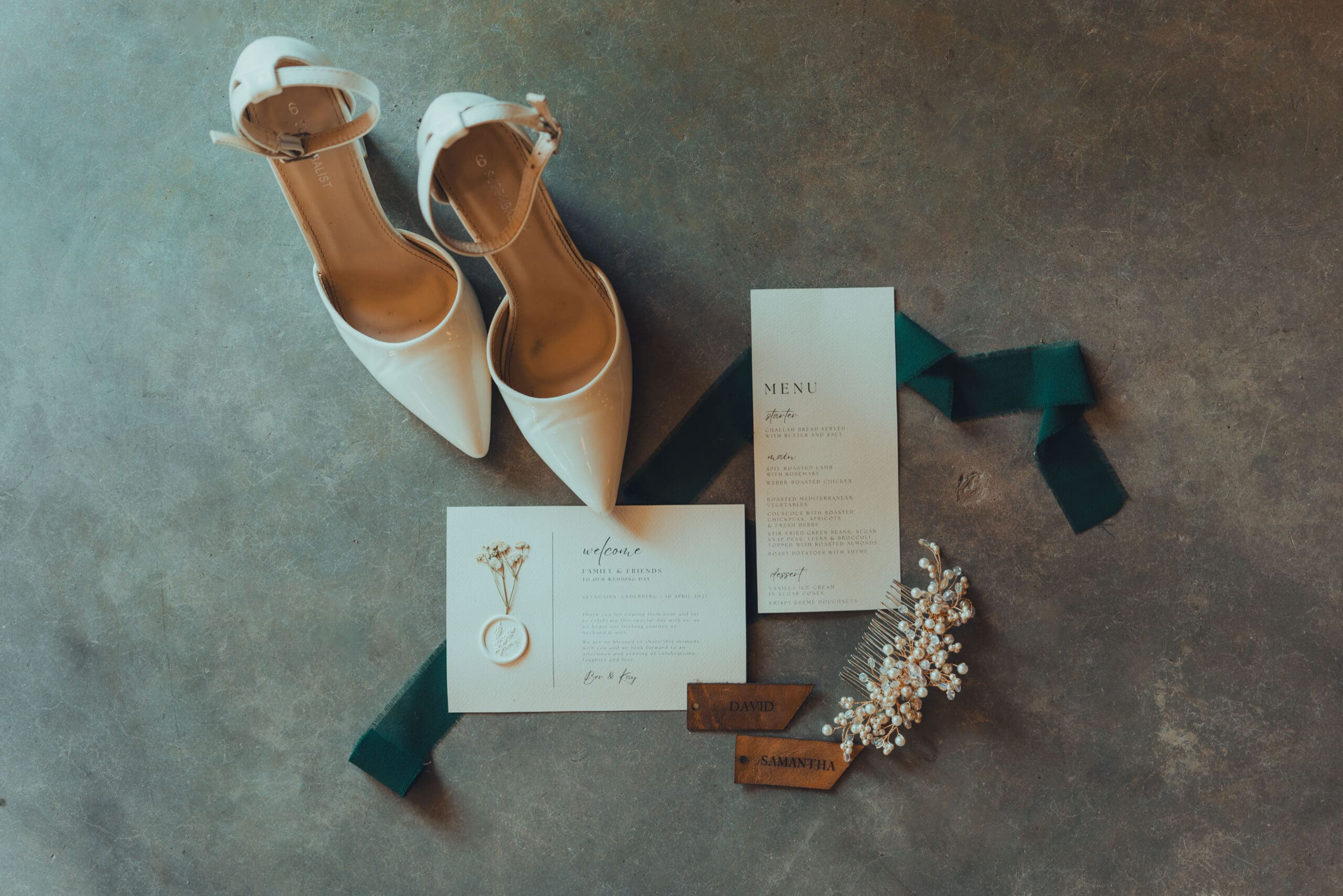
(LEFT) AURORA DESIGNS | STEPHEN MICHAEL (RIGHT) ELYSIAN PHOTOGRAPHY
3. Where to invest — and where to save
Worth splurging on:
- Invitation design: Even if you’re going digital, a professionally designed invite (or wedding website) is the first impression of your wedding.
- Day-of signage & programmes: These are both functional and part of your décor and guests will see them, interact with them, read them – and even take photos of them.
- Menus & place cards: Especially for sit-down dinners—they elevate the guest experience and complete your tablescape.
- Thank-you cards: These are personal and sentimental keepsakes that guests will treasure.
Areas to save:
- Printed save-the-date: Digital versions are cost-effective, especially if you’re avoiding postage.
- Superfluous inserts: Extra maps, RSVP cards, or registry notes—use selectively.
- Embellishments like wax seals, customised ribbon, embossing: These are pretty, but pricey so if you are on a budget, pick one or two standout elements rather than overdoing it.
BURCZAK WEDDING PHOTOGRAPHY
4. Wording, design & coherence
Keep your wording clear and highlight the date, time, dress code, and RSVP instructions.
Match your stationery to your wedding aesthetic—colours, themes, and fonts should give guests a preview of what’s to come.
Use your wedding website for extra info: directions, lodging, registry, FAQs if needed.
Be explicit about Plus Ones to avoid any confusion—guests should know exactly who is invited.
(LEFT) AURORA DESIGNS | VIX PHOTOGRAPHY (RIGHT) WILLOW & MIST DESIGNS | TUHI PHOTOGRAPHY
5. Contracts, proofs & printing logistics
When working with your stationer, ensure you have a contract in place that spells out timelines, proofs, pricing, what’s included, extra charges for artwork changes.
Order proofs: get paper samples, check print quality, colours, how materials feel (envelope texture, card stock).
Order extras: always order a few more invites, menus, place cards than you think you need—mistakes happen, guest numbers change.
Postage and delivery times: if you are planning to send hard copy invitations, factor in potential delays.

Final thoughts
There is no single “right way” to do wedding stationery. What matters most is that your invites, signage, menus, and thank-yous feel like they represent you and communicate clearly to your guests.
Start early, think strategically (digital or print or both), know what you want to spend on — and remember, a beautiful card is lovely, but love is what fills the room.
To dot your i's and cross your t's, contact our talented stationery teams:
 Lara from Aurora Designs
Claudia from Willow and Mist Design